Publish Time:2019-03-09
Over the past 40 years of reform and opening-up, China’s steel pipe industry has grown from scratch and expanded from small to large, achieving rapid development and remarkable accomplishments. Since 2012, China’s steel pipe output has accounted for more than half of the world’s total production. In 2017, the output increased 64 times compared with 1978, making China a veritable major steel pipe manufacturing country. Meanwhile, China’s steel pipe manufacturing equipment level, product variety range and technical content are all approaching world-class advanced standards.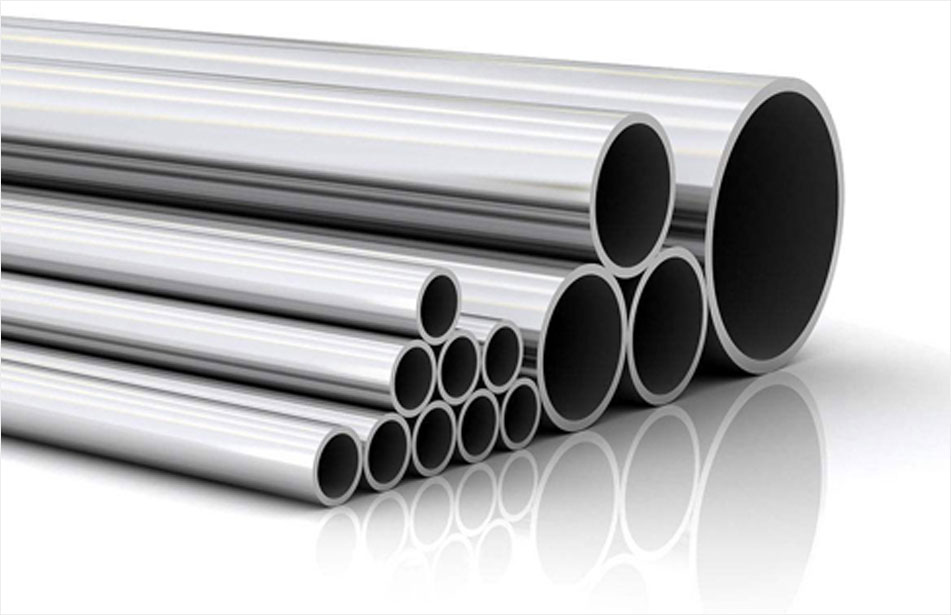
Today, China’s steel pipe industry is transitioning from high-speed growth to high-quality development. Its strategic development direction focuses on green manufacturing, intelligent production and lightweight design, striving to build a robust, advanced and modernized steel pipe industrial system. Looking back over decades of development, we witness the earth-shaking transformation of China’s steel pipe sector, forged by the tremendous driving force of reform and opening-up.
40 Years: China Evolves into a Global Steel Pipe Giant
Steel pipes occupy a critical strategic position in the iron and steel industry. The "pipe ratio" is a core benchmark indicator measuring the development level of a nation’s steel industry. Since the reform and opening-up, the socialist market economy has fueled rapid expansion of China’s steel pipe sector, creating a remarkable miracle in the global history of steel pipe development.
Output & Capacity: From Dependence to World Leadership
In the early days of the People’s Republic of China, our country could not produce seamless steel pipes independently. It was not until October 27, 1953 that the first seamless steel pipe unit imported from the former Soviet Union was commissioned, rolling out China’s first seamless steel pipe.
- 1978: China’s seamless steel pipe output reached 820,000 tons, surpassing the UK and France
- 1983: Output hit 1.15 million tons, overtaking Italy
- 1992: Output reached 2.65 million tons, exceeding Western European nations
- 1994: China became the world’s largest seamless steel pipe producer, a position it retains to this day
Apart from seamless pipes, China had no formal welded pipe industry in the early founding period, relying entirely on manual production. After the reform and opening-up, China’s welded pipe industry achieved explosive growth:
- 1978: Output reached 860,000 tons, surpassing Japan
- 1994: Output climbed to 4.32 million tons, ranking first globally among welded pipe manufacturers, a leading position maintained ever since
2004 onwards: Peak Production & Net Export Transformation
In 2004, China’s steel pipe output reached 21.49 million tons, breaking the former world record of 20.84 million tons set by the Soviet Union in 1988, officially making China the world’s No.1 steel pipe producer.
Of the total 21.49 million tons:
- Welded pipe: 13.01 million tons (60.54%)
- Seamless pipe: 8.48 million tons (39.46%)
In 2000, China shifted from a net importer to a net exporter of steel pipes. By 2004, the net export volume reached 360,000 tons, and this net export status remains unchanged.
By 2017, China’s total steel pipe output surged to 79.27 million tons:
- Seamless pipe: 26.10 million tons
- Welded pipe: 53.17 million tons
Since 2012, China’s total annual output of steel pipes (both seamless and welded) has consistently accounted for over 50% of global total output. This marks an extraordinary historic achievement of China’s iron and steel industry driven by reform and opening-up.
Technology Upgrading: Entering World Advanced Ranks
Driven by imported first-generation seamless pipe rolling mills at the start of reform and opening-up, domestic enterprises successively introduced world-class advanced steel pipe technologies from Germany, Japan, the United States, Italy and other nations.
Domestic complete equipment manufacturing capabilities evolved from imitation and introduction to independent innovation, nurturing a large number of proprietary steel pipe technologies. In particular, domestic medium and heavy wall welded pipe, spiral welded pipe and high-frequency welded pipe production lines have reached high levels of localization, with multiple technologies achieving full domestic replacement. This milestone signifies that China’s steel pipe technological equipment has stepped into the ranks of global advanced powers.
In the field of seamless steel pipes, we are equipped with the world’s largest 360MN (36,000-ton) vertical extrusion pipe mill, the world’s largest Φ460mm “ASSI” three-roll pipe rolling mill, maximum Φ720mm periodic pipe rolling mill, Φ1500mm push pipe mill, and 4 sets of nuclear power U-tube mills. These facilities have not only reached world advanced level, but some have also taken the commanding heights of global steel pipe technology and equipment.
For welded pipe production lines, units such as Baosteel UOE Φ1420mm mill, JCOE longitudinal submerged arc welded pipe mill from Baoji Steel Pipe of the petroleum system, spiral submerged arc welded pipe pre-finishing mill, Baosteel ERW Φ610mm mill, and Baoji Steel Pipe Φ90mm continuous oil pipe mill have elevated China’s welded pipe technology and equipment to a world-leading position.
Fruitful Achievements in Technological Innovation & Product Structure Optimization
Since the reform and opening-up, China has overcome technical challenges and carried out independent technological innovation, continuously bringing steel pipe product quality in line with top international standards.
Boiler Pipe Sector
China has built approximately 1224 GW (141 units) of 600°C ultra-supercritical thermal power generating units, accounting for 80% of the global total and ranking first worldwide.
- Baosteel has developed P91 600°C ultra-supercritical high-pressure boiler tubes and CAP1400 Generation III nuclear power 690 alloy U-tubes, reaching global leading standards.
- Baosteel Precision Tube offers the widest range and most complete specifications of small-diameter seamless boiler tubes for power stations, fully replacing imports.
- Baosteel, Tianjin Pipe and Huaying Steel have developed high-grade X100/X100Q large-diameter heavy-wall (Φ324mm×36mm / Φ168mm×28mm) seamless pipes for offshore platform foundation piles.
- Domestic manufacturers including Baosteel, Tianjin Pipe, Huaying, Baotou Steel and Angang Steel have achieved full localization of premium OCTG products: special threaded oil tubing, duplex stainless steel (22Cr) pipes, titanium alloy casing, H₂S corrosion-resistant casing (C110, 110SS), and heavy oil thermal recovery casing (110H, 125H).
Welded Pipe Sector
Domestic long-distance natural gas pipelines adopt X80 steel grade, with transmission pressure up to 12MPa and a large diameter of 1420mm — already world-class performance.
- For offshore engineering applications, CNPC Baoji Pipe pioneered X80 grade Φ533.4mm×25.4mm longitudinal submerged arc welded pipes for offshore water-stop risers.
- Baosteel UOE steel pipes (Φ726mm×31.8mm) were deployed for the 1,500m deep-sea subsea pipeline of the Liwan 3-1 project in the South China Sea. With maximum operating pressure of 24MPa and X70 steel grade, they meet top international specifications.
- Baoji Steel Pipe is the only Asian manufacturer of high-strength Φ90mm continuous oil pipes, filling a domestic supply gap and exporting products to Russia.
Private Enterprises: An Indispensable Driving Force for Industry Growth
China’s 40-year steel pipe development demonstrates two distinct characteristics:
1. State-owned enterprises hold core technological advantages and dominate the high-end premium product segment.
2. Private enterprises capture a large market share and lead in mid-to-low-end product categories.
Following the reform and opening-up, with ideological emancipation breaking free from the ideological shackles of "public vs. private ownership", policies allowed township collective and private enterprises to serve as a supplement to the national economy, enabling private steel pipe enterprises to rise rapidly.
Three objective conditions also paved the way for private sector growth at that time:
1. Private manufacturers started with technically mature mid-to-low grade steel pipe products. As pipe production lines were easy to deploy, private enterprises mushroomed across the country and rapidly expanded their production capacity.
2. Talent policy reforms unleashed mobility. A large number of management and technical experts from state-owned steel, pipe, research, design and academic institutions joined private pipe companies. For instance, senior professors from Shanghai Jiao Tong University led technical R&D at private seamless pipe manufacturers, while former chief engineers from Baoji Petroleum Steel Pipe took senior production management roles at private welded pipe plants, greatly elevating their technical level and manufacturing capability.
3. Downstream market demand surged across construction, gas, textile and home appliance sectors. There was a general shortage of materials, especially common and welded pipes. Meanwhile, the petroleum industry issued official support documents allowing high-frequency longitudinal welded pipes (ERW) to partially replace seamless pipe demand. This drove welded pipe enterprises to spread nationwide, sending private-sector pipe output soaring.
After 40 years of development, private steel pipe enterprises have gained remarkable global standing:
- Jiangsu Changbao Steel Co., Ltd. exports small-diameter thin-wall precision high-pressure boiler tubes to Japan, Germany and South Korea.
- Shanghai Tianyang Steel’s metallurgical composite pipes serve boiler and petroleum industries for export; its copper-tin alloy and titanium composite pipes are widely used in seawater desalination.
- Seamless automotive pipes produced by Changshu manufacturers are shipped to Japan and South Korea.
- Shanghai Xinliang Stainless Steel exports its specialty products to the U.S. market.
- Dixin Steel (China) supplies large-diameter heavy-wall high-strength alloy seamless pipes to the European industrial chemical pipeline market.
Private welded pipe makers also deliver outstanding breakthroughs:
- For the Donghai Bridge project requiring high-strength, high-elasticity guardrail pipes, Shanghai Shenhua Steel developed MDB400 Φ114mm×6mm special high-frequency longitudinal welded pipe for bridge railings. Replacing conventional B330 Φ114mm×12mm seamless pipe, it reduced steel consumption by 30%.
- Guangzhou Panyu Zhujiang Steel introduced MM(E) technology from Australia in 1998 and UOE large-diameter longitudinal submerged arc welded pipe lines from the U.S. in 1999, filling China’s production gap in this category. Its UOE pipes were applied in key steel structures for Beijing Olympic venues, while high-grade X70/X80 linepipe for long-distance oil & gas and subsea pipelines were successfully developed.
- Tianjin Youfa Steel Group, focused on premium galvanized welded pipes, boasts an annual output of around 10 million tons.
China’s Steel Pipe Future: Focus on High-Quality Upgrading
The industry’s strategic goal is to achieve green, intelligent and lightweight development:
- Green manufacturing = the bottom line for enterprise survival
- Intelligent manufacturing = the commanding height of global competitiveness
- Lightweight design = optimized matching of product strength and toughness
All three targets drive manufacturers to pursue higher quality, efficiency and profitability.
Notably, in recent years, numerous steel pipe enterprises have already taken solid steps toward high-quality, sustainable industrial transformation.
1. Technical upgrading of existing production lines to meet market demand
For example, Baotou Seamless Steel Pipe renovated and upgraded its Φ100mm seamless pipe production line to shift toward the mid-to-high end market. With technical support from Shougang, after technological transformation, a Jilin Tonghua high-frequency welded pipe enterprise produced 1000MPa ultra-thin precision cold-formed rectangular welded pipes (40mm×40mm×1.2mm), catering to the lightweight trend of automotive piping.
2. Building new high-level production lines and core equipment
To elevate process and product performance, CISDI designed the world’s first Φ89mm three-roll continuous rolling seamless pipe mill for Linzhou Fengbao Pipe Industry, manufacturing premium products such as Φ25mm~Φ114mm bearing pipes and boiler tubes.
- Baosteel Yantai Steel Pipe developed China’s first on-line controlled cooling equipment for seamless steel pipes, realizing on-line quenching & tempering and opening up new innovation paths.
- CISRI developed the largest-specification Φ730mm LG-730-HLS servo-controlled two-roll cold-reducing pipe mill, reaching international leading standards.
3. Smart manufacturing and major scientific research projects
- Hualing Steel Pipe’s seamless pipe plant was designated as a national intelligent manufacturing demonstration pilot by the Ministry of Industry and Information Technology.
- Baoji Petroleum Steel Pipe reconstructed its spiral welded pipe workshop to achieve full-process visualized internet monitoring, with remote access available via office PCs and mobile terminals of management teams.
- Anshan Iron and Steel led the launch of the national key R&D program: Low-Temperature, High-Pressure and High-Strength Line Pipe Project, which will greatly improve the quality of China’s line pipe steel.
4. Accelerating new product R&D
- Tianjin Pipe Corporation developed Φ114.3mm×19.5mm 4130 high-pressure drilling mud pipes, applied on the Blue Whale 1 drilling platform.
- Tianjin Pipe completed special connection performance evaluation tests on CO₂ and H₂S corrosion-resistant duplex steel casing.
- Hualing Steel Pipe supplied extra-large diameter WB36 and P91 seamless pipes for the world’s largest 1.35 million kW thermal power unit.
- Hegang Handan Steel produced 12Cr1MoVG high-pressure boiler tubes.
- Taigang Stainless Steel developed duplex stainless seamless pipe series including 022Cr25Ni7Mo4N.
5. Environmental protection and energy conservation
- Hualing Steel Pipe’s No.340 plant reduced monthly power consumption by 25% by retrofitting its water treatment system with variable frequency water pump control.
- Tianjin Pipe passed municipal industrial energy-saving assessment; multiple energy-saving renovation projects such as blast furnace slag water recycling and steam pipe network optimization were promoted for Tianjin Pipe.
- Shandong Luxi Group Panjin Seamless Steel Pipe applied hot charging, hot delivery and controlled rolling in new production line layout — an original innovative technology in the seamless pipe sector, while controlling the pace of new capacity expansion.
6. Cost reduction and efficiency improvement
By seizing market opportunities, optimizing product mix, tapping potential for cost reduction and focusing on core business, Tianjin Pipe achieved a 122% YoY increase in total core operating profit in Q3 2018 while maintaining solid profitability.
7. Resolving overcapacity and promoting enterprise restructuring
For instance, Beijing Jianlong Heavy Industry completed the reorganization of Xilin Iron and Steel Group.
Standing at this 40-year historical milestone and looking ahead to the new journey, China’s steel pipe industry must seize the current period of strategic opportunity, take proactive steps, strive for high-quality development, and achieve the goal of becoming both large and globally strong.

Follow